Best Manual Coffee Grinders for Travel and Home
These manual coffee grinders are portable, quiet, and capable of producing café-level grind quality for your favourite brew methods.
Why Manual Coffee Grinders Still Matter
Manual coffee grinders are slower than electric models, but they offer impressive grind quality for the price and never need power. For campers, travellers, and home brewers who enjoy a quiet, hands-on ritual, the best manual coffee grinders are often more satisfying than entry-level electric units.
The grinders below range from compact travel models to premium hand grinders that coffee geeks trust for serious espresso and pour-over. All use burrs instead of blades and are designed to deliver consistent results once you find the right grind setting.
Editor’s Top Manual Coffee Grinder Picks
Manual coffee grinders chosen for grind consistency, travel friendliness, and strong buyer reviews.


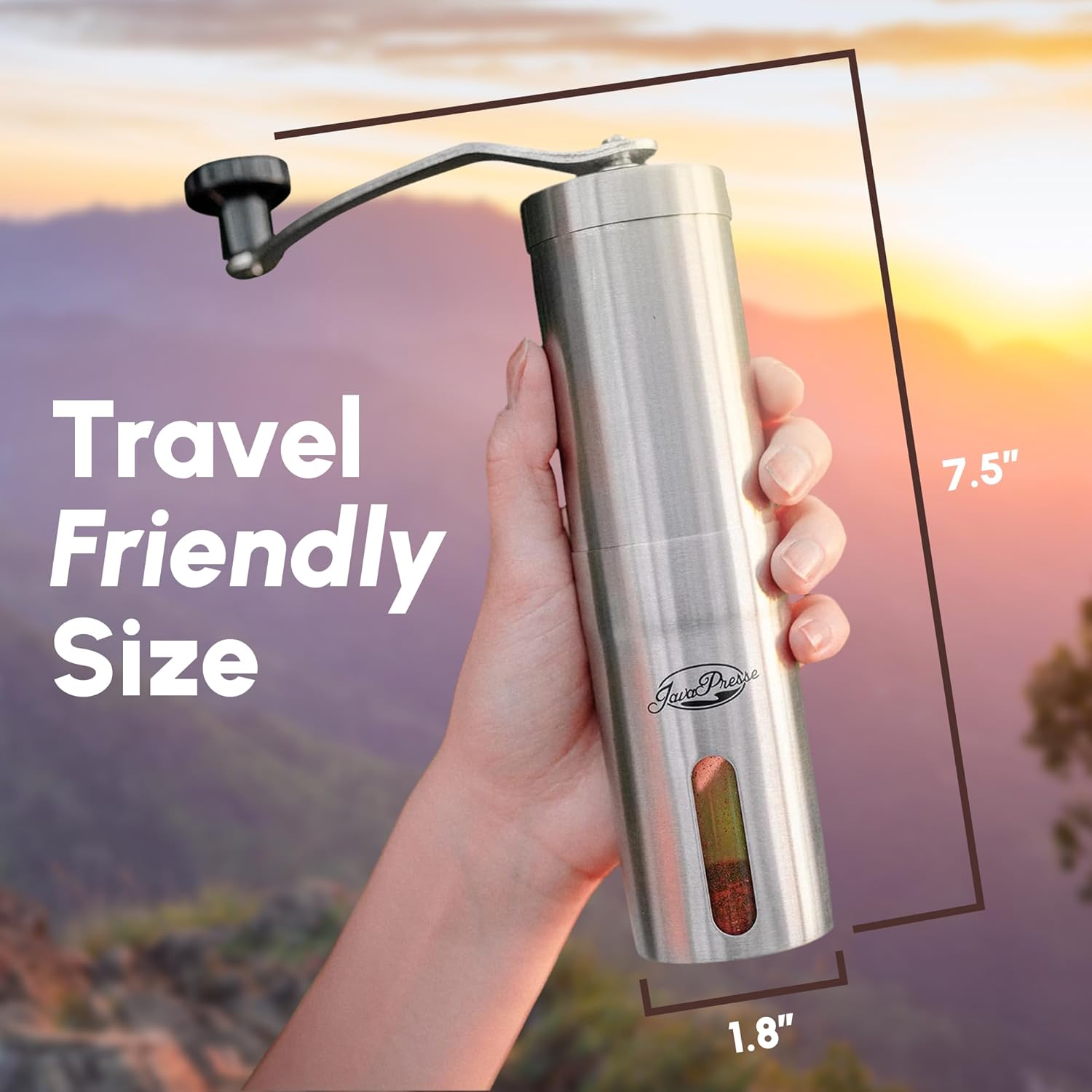


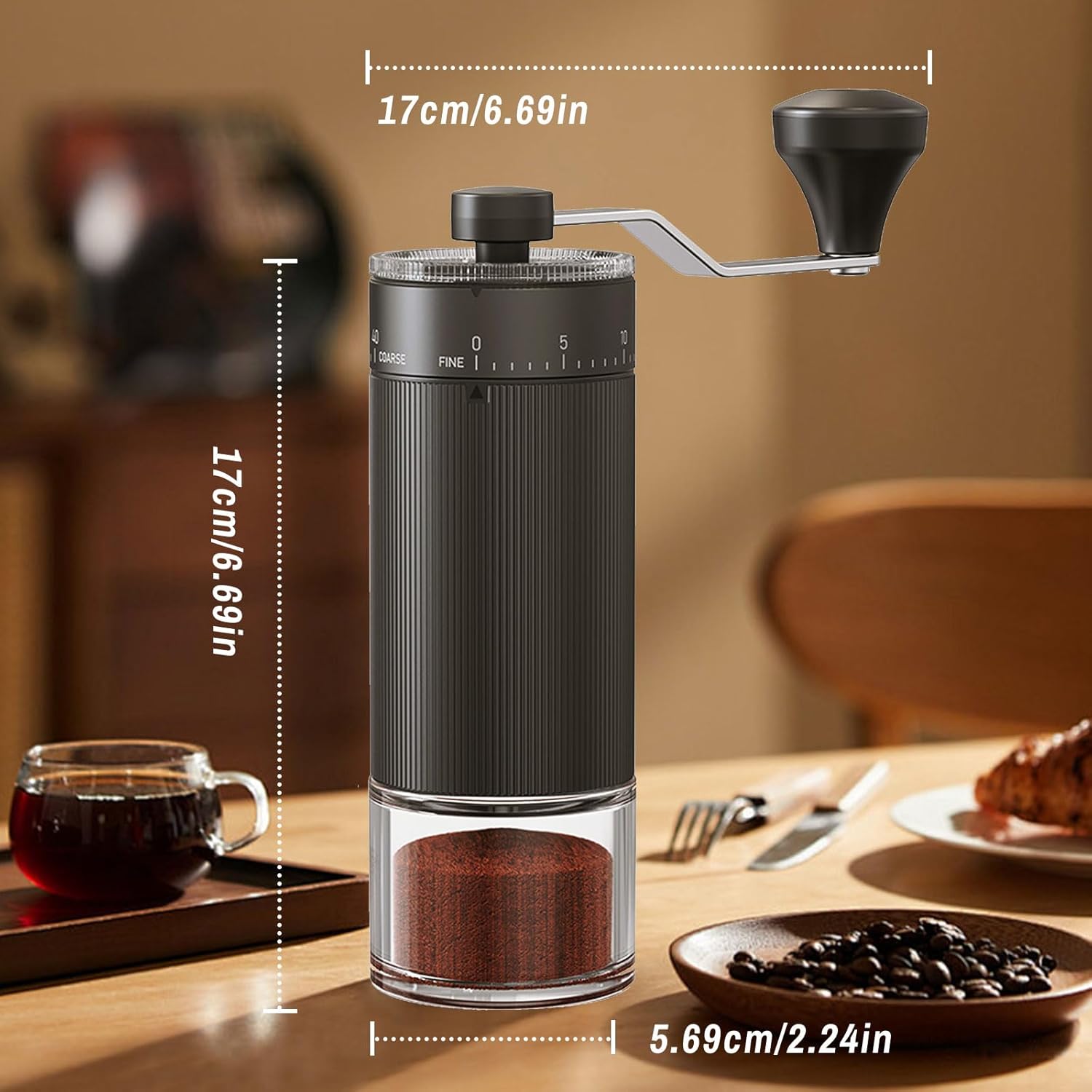

As an Amazon Associate, we earn from qualifying purchases. Images from Amazon Product Advertising API.
How to Choose the Best Manual Coffee Grinders
Choosing between different manual coffee grinders comes down to grind quality, adjustment range, build materials, and how you plan to use the grinder. Do you mostly brew espresso, pour-over, or French press? Are you grinding at home, in an office, or out on the trail?
1. Burr quality and grind consistency
Look for stainless steel or ceramic burrs with a reputation for uniform particle size. Consistent grind means more even extraction and fewer sour or bitter flavours in the cup. Many of the best manual coffee grinders on this list, such as the well-known JavaPresse and TIMEMORE models, are praised for their balance of price and performance.
2. Adjustment range and brew method support
If you brew espresso, you need fine, repeatable adjustment. Some manual coffee grinders are tuned mainly for filter coffee and struggle to go fine enough. Others provide 30–60+ clicks of adjustment, making it easier to move between espresso, moka pot, AeroPress, and coarser settings for French press.
3. Capacity, weight, and ergonomics
Smaller manual coffee grinders are lighter and pack easily for travel but hold less coffee per batch. Larger grinders are more comfortable for daily home use. Consider how the handle feels, how stable the grinder is while turning, and whether the catch cup is easy to remove and clean.
4. When a manual grinder makes more sense than electric
Manual coffee grinders shine when you value silence, portability, and simplicity. They are less likely to break than cheap electric grinders and do not generate much heat while grinding. If you only brew a couple of cups a day and like being involved in the process, a manual grinder is often a better long-term investment than a low-end electric model.
For more context on pairing grind size with brew methods, you can explore charts and resources from the Specialty Coffee Association and other specialty coffee sites. To match your grinder with the right beans, visit our Coffee Beans hub or focus on espresso-friendly profiles in the Espresso Roast guide.